Neuroanatomy of the Mind
Neurophysiology of the Mind
Neuropathology
of the Mind
For the Neuroscience and
For the Patients


▶︎To Information List

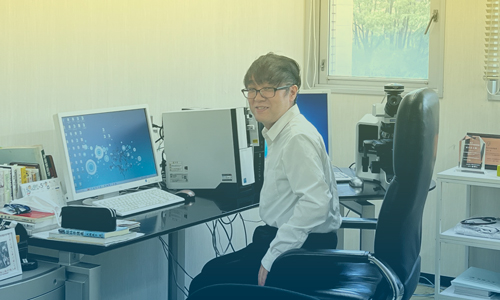
My name is Kenta Masui, and as of April 1, 2025, I have been appointed Professor of the Department of Integrative Neuroscience, Graduate School of Biomedical Sciences, Nagasaki University. When I first entered the School of Medicine at this university in 1996, I was immediately drawn to the question of the “seat of the mind.” Guided by the conviction that human mind must have a morphological basis, I received my training in neuropathology under Prof. Toru Iwaki at Kyushu University. Later, at the University of California in the US, I worked under Prof. Paul Mischel, where I established my research foundation by exploring the morphological basis of the mind from molecular and omics perspectives. After returning to Japan, I had the privilege of working at the Tokyo Metropolitan Institute of Medical Science and Tokyo Women’s Medical University, where I was mentored by internationally renowned neuroscientists—Prof. Nobutaka Arai, Noriyuki Shibata and Takashi Komori. These experiences broadened my academic perspective, and I was given the opportunity to return as a full Professor to my alma mater, Nagasaki University.
The Department of Integrative Neuroscience is a newly established lab, with the mission of “advancing neuroscience in Nagasaki.” The word “integrated” carries a special meaning here, as the department itself represents the integration of two long-standing and distinguished departments at Nagasaki University: The Department of Neurophysiology and the Department of Neuroanatomy. From anatomy to the mind, from physiology to the mind, and from a patient-first perspective in neuropathology, our department seeks to approach the workings of the mind through these “three arrows.” The lab is filled with enthusiasm for this endeavor. Our mission is to cultivate young researchers who are not only deeply interested in basic neuroscience, but who can also address research questions from the perspective of patients suffering from neurological disorders. In doing so, we aim to strengthen and advance the field of neuroscience here in Nagasaki.
Having returned to my alma mater after 20 years, I am determined, together with all members of our department, to move forward with these challenges. We warmly welcome those who are eager to explore the mysteries of the brain and who wish to contribute to improving the lives of patients with neurological diseases.
My name is Kenta Masui, and as of April 1, 2025, I have been appointed Professor of the Department of Integrative Neuroscience, Graduate School of Biomedical Sciences, Nagasaki University. When I first entered the School of Medicine at this university in 1996, I was immediately drawn to the question of the “seat of the mind.” Guided by the conviction that human mind must have a morphological basis, I received my training in neuropathology under Prof. Toru Iwaki at Kyushu University. Later, at the University of California in the US, I worked under Prof. Paul Mischel, where I established my research foundation by exploring the morphological basis of the mind from molecular and omics perspectives. After returning to Japan, I had the privilege of working at the Tokyo Metropolitan Institute of Medical Science and Tokyo Women’s Medical University, where I was mentored by internationally renowned neuroscientists—Prof. Nobutaka Arai, Noriyuki Shibata and Takashi Komori. These experiences broadened my academic perspective, and I was given the opportunity to return as a full Professor to my alma mater, Nagasaki University.
The Department of Integrative Neuroscience is a newly established lab, with the mission of “advancing neuroscience in Nagasaki.” The word “integrated” carries a special meaning here, as the department itself represents the integration of two long-standing and distinguished departments at Nagasaki University: The Department of Neurophysiology and the Department of Neuroanatomy. From anatomy to the mind, from physiology to the mind, and from a patient-first perspective in neuropathology, our department seeks to approach the workings of the mind through these “three arrows.” The lab is filled with enthusiasm for this endeavor. Our mission is to cultivate young researchers who are not only deeply interested in basic neuroscience, but who can also address research questions from the perspective of patients suffering from neurological disorders. In doing so, we aim to strengthen and advance the field of neuroscience here in Nagasaki.
Having returned to my alma mater after 20 years, I am determined, together with all members of our department, to move forward with these challenges. We warmly welcome those who are eager to explore the mysteries of the brain and who wish to contribute to improving the lives of patients with neurological diseases.
© Copyright
Department of Integrative Neuroscience,
Graduate School of Biomedical Sciences,
Nagasaki University